Celeste is a game that is built and centralized around the idea of anxiety. The creators wanted to make a game that presented this topic from an individual’s perspective. To achieve this they utilized their own experiences with anxiety to encapsulate the idea within the game, so it can be seen within every crevice of the game, from the music, to the gameplay, and—most importantly—the story itself.
Starting with the music, composer Lena Raine composed tracks that she believed encapsulated her own experience with anxiety and placed the rhythms expressing those feelings at the points in the game where they were needed most. The scene that I believe captures the soul of Lena’s music along with the story is the gondola scene from the end of Chapter 4: Golden Ridge.
This scene takes place after Madeline (the main character, in this video renamed “ICEY” by the player) completes a difficult trek through a windy part of the mountain and finally arrives at a gondola, but she is nervous about how safe riding it may be. Her friend, Theo, coerces her into riding on the gondola with him despite her nervousness and tries to let her know that things will be alright, yet partway through a dark figure appears and causes the gondola to stall out. This dark figure is a part of Madeline, her “darker” side. The more negative emotions of Madeline’s manifested into this being, known as Badeline to fans, and has been attempting to stop Madeline from climbing the mountain throughout the journey so far.
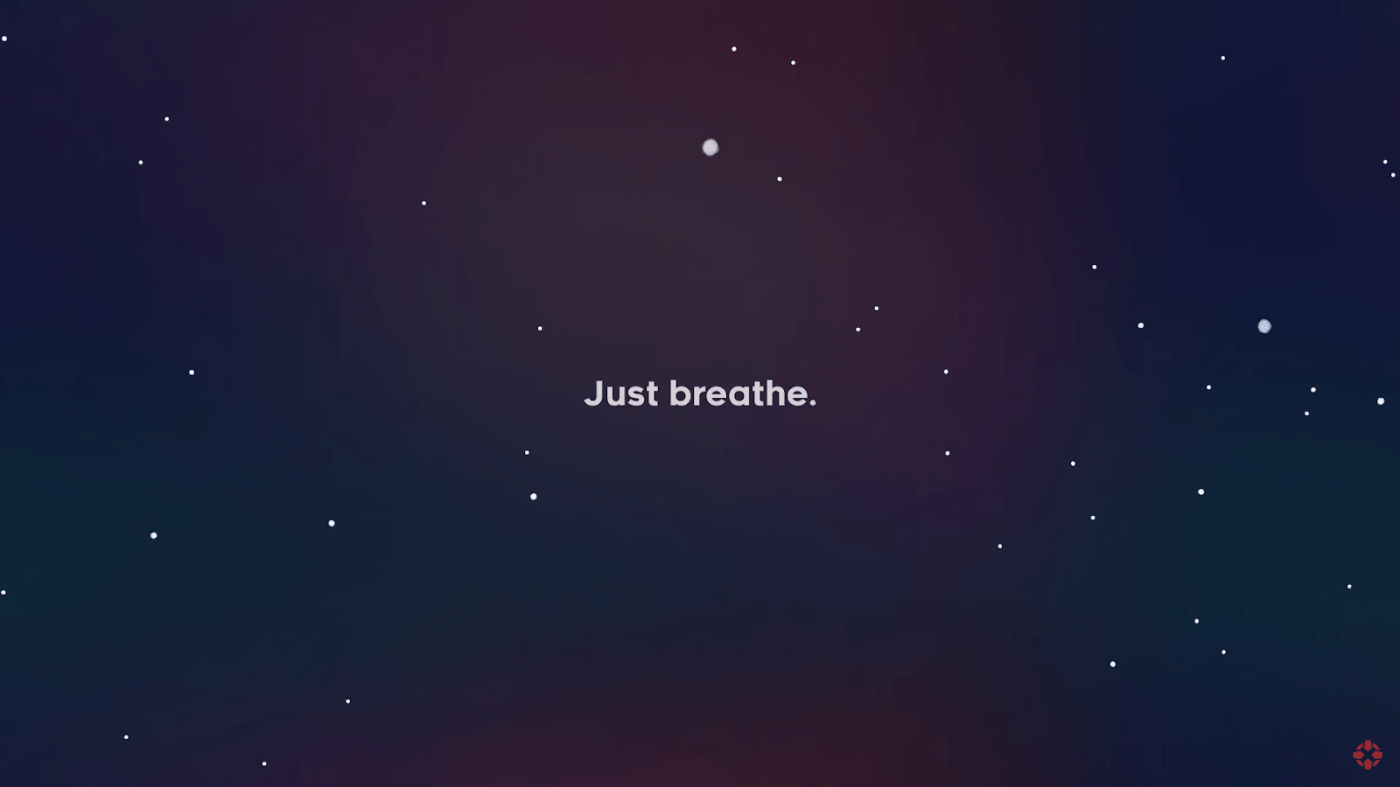
Madeline’s anxiety was so prevalent in this scene that Badeline appeared to stall the gondola, and Theo comforts Madeline and helps her through the panic attack she has. The music shines during this scene, as before the panic attack and the stop of the gondola there is a soft piano playing, which represents a calm Madeline, but as the attack begins a loud, blaring synth takes over the ambiance screaming at the player and completely drowning out the sound of Madeline’s piano. The music emulates Madeline’s panic attack by having the attack (the synth) envelop the person (the piano), but as the player works through a breathing exercise to subside the panic attack, the loud synth begins to lessen in volume and the soft piano that is Madeline is audible and clear again. The music is used to convey the anxiety that Madeline feels and along with the Golden Feather Mini-Game in the sequence, the player acts out the same feeling of the character in that moment. Additionally, the feather shown in the mini-game becomes a gameplay element in a later chapter.
The feather shows up in Chapter 6: Reflection, wherein Madeline attempts to confront Badeline, however she ends up having the wrong idea about controlling her anxiety and thinks she can just get rid of Badeline (her anxiety). The feathers are used when you traverse the level to meet Badeline, and they are continuously used whenever Madeline realizes (through dialogue with another character) that she should confront Badeline with a mindset to understand and help her, rather than fighting her. The feathers represent Madeline’s steady willingness to confront her anxiety and her continued efforts to do so, despite hindrances and failures along the way.
As can be seen, anxiety is the very basis of Celeste and has been place within every part of the game in order to immerse the player in this same feeling of anxiety. The gameplay itself is quite difficult, but does not greatly punish the player for making mistakes. Whenever the player dies, they only have to start from the beginning of the screen they are on again, rather than the beginning of the level or game itself. The screens are each individually challenging, but they are also relatively short and completing one may be difficult but once completed you are given a new respawn point and different set of obstacles to face. While the use of everything in Celeste to evoke an anxious feeling in the player may be triggering for some, there is an assist mode included in the game, which allow the player to traverse challenges easier.

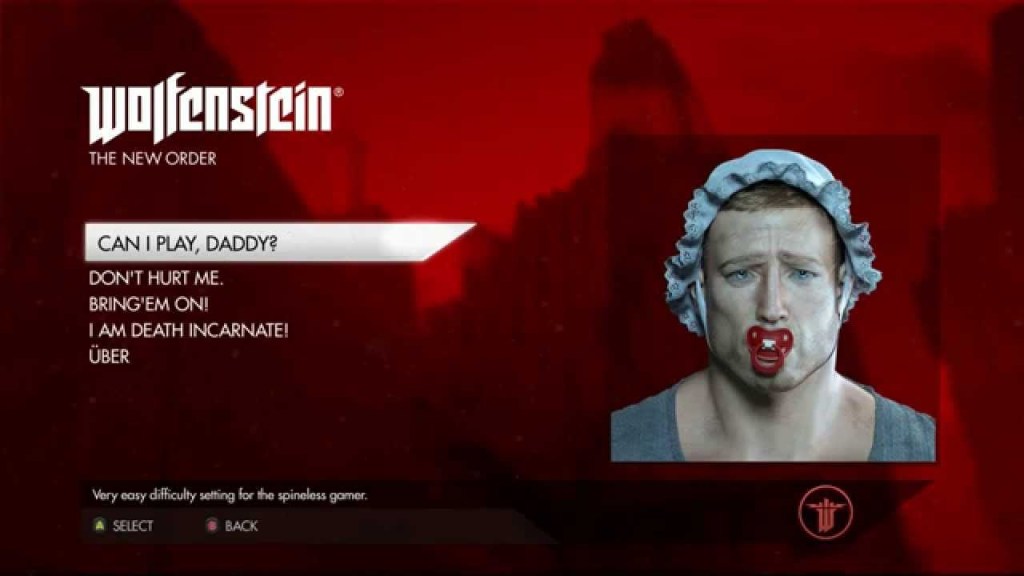
While the assist mode is not nearly the intended way the developers want the player to engage with the game, but it can be used so that more people can experience the story. The assist mode opens a dialogue with the player whenever it is accessed as seen in the above collage, rather than degrading the player like other video games have done for changing the internal difficulty setting, such as in Wolfenstein: The New Order. As can be seen in the image above, the difficulty select at the beginning of Wolfenstein is degrading the player through use of words like “spineless” to describe them for hovering over the easiest difficulty: “Can I play, daddy?”
While Celeste’s difficulty level is high, the game keeps sections short and realistic to complete in one process, while still becoming more difficult and never boring over time by including new gameplay mechanics with each chapter (i.e. the golden feather mechanic being added in Chapter 6). The game tries to minimize the distress that the player feels while also not giving too much eustress, which keeps the player stuck in a state that can be referred to as flow. Flow is an experience that Mihaly Csikszentmihalyi describes as “the state in which people are so involved in an activity that nothing else seems to matter; the experience itself is so enjoyable that people will do it even at great cost, for the sheer sake of doing it.” The game sets itself up so that it works within the confines of flow—potentially inadvertently—by not being too challenging yet not too easy. Additionally, it encourages the player to keep progressing through small messages seen between levels and even in the official merchandise, as seen below.




Celeste works from the very foundation of itself to immerse the player in a feeling of anxiety, without ostracizing them for being uncomfortable with the idea of changing difficulty as not to be overwhelmed. The game and it’s creators wanted to educate about mental illness (specifically anxiety) in a way that could be easily understood but was not abhorrent and unbearable.
 Mental Health in Video Games
Leave a comment