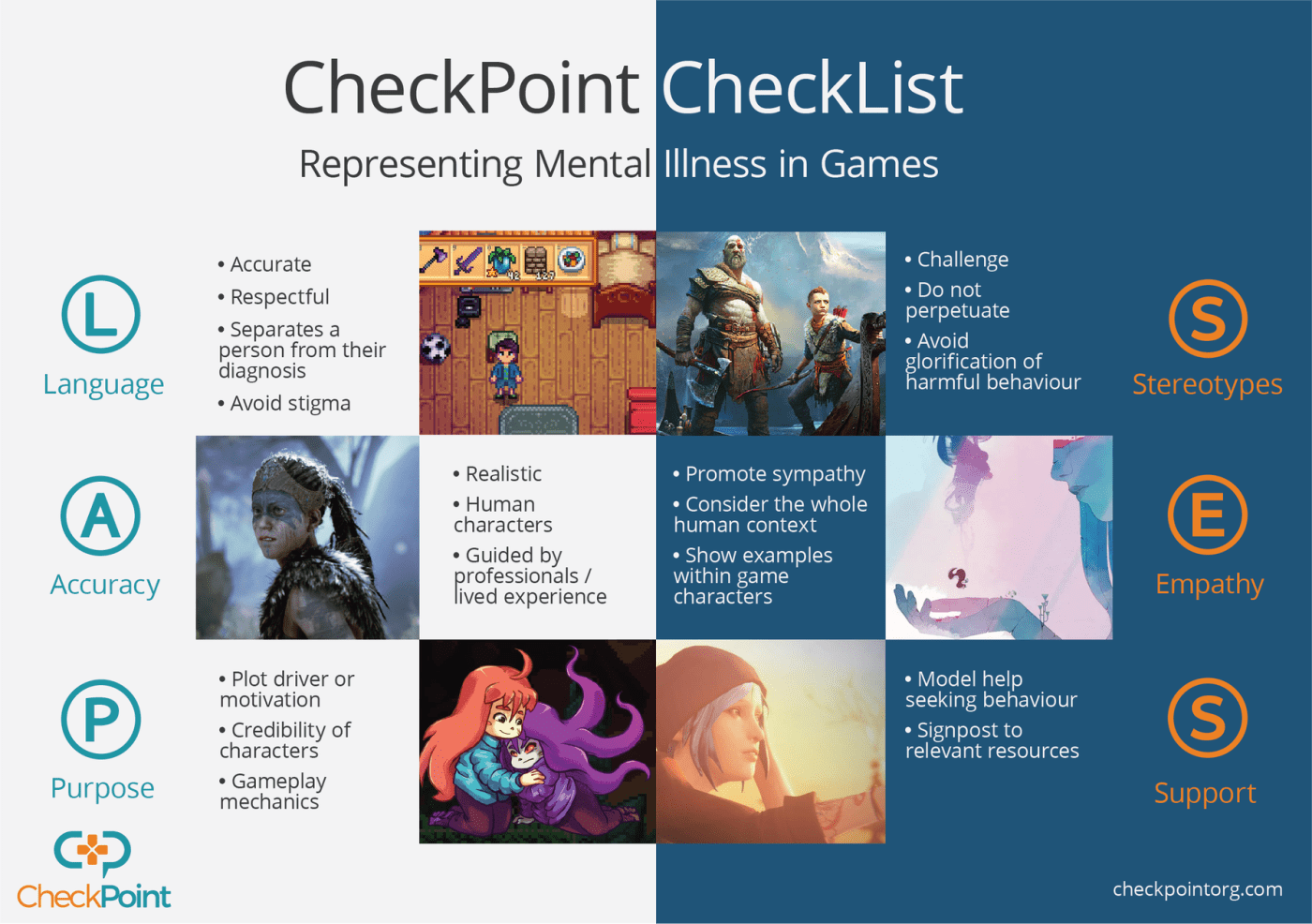
Pictured above: A checklist from CheckPoint’s website overviewing how to properly present mental illness in media.
As I mentioned in Home, presenting mental illness in understandable and relatable ways helps reduce stigma and lets those suffering feel less insecure about reaching out for assistance. The presentation of mental illness reflects how society views the topic, but inversely the way we change this presentation can shift how people view the topic.
Recommendations for how to present mental illness in media are accessible and easy to understand due to the work of organizations such as CheckPoint and Mindframe. These organizations both promote the presentation of believable, accurate, and compelling characters with mental illness for destigmatization. Mindframe has a navigable list of guidelines which can help with determining the best way to present mental illness within a piece of media.
Before anything, they recommend considering the importance of mental illness within the context of a character or story and how much of it should be discussed to effective means. If the mental illness is irrelevant, then it should not be discussed heavily as it may misdirect the intended message or make the character two-dimensional. From there, it is important to consider how and why mental illness fits into different situations of the story and how it is presented. Mental illness should usually not be the defining factor or headline of a piece of work, as it may perpetuate misconceptions about the effect of mental illness in a person. The language used should also be effective in clearly stating cause and effect along with symptoms and diagnosis (i.e. the use of the word “psycho” and how it can imply psychopathy or psychosis, despite being different, as mentioned in Common Tropes).
The image at the top of the page from CheckPoint presents a quick overview of how to present mental illness in media, including some points not discussed. Utilizing any or all of these points can help make the presentation of mental illness within media become more impactful and rewarding to those experiencing it by helping them understand the feelings of the characters clearly and reducing stigma by adequately perpetuating positive and accurate information about mental illness. It is important to build an image of mental illness which shows that one should not be scared of those suffering from it or ushering away sufferers from seeking the help they need.
 Mental Health in Video Games
Leave a comment