Common Tropes
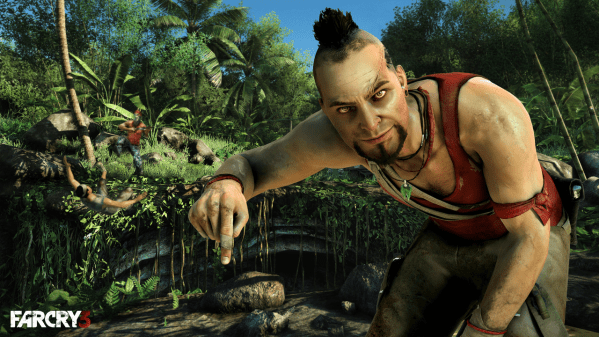
As I mentioned in Home, within popular media, mental illness is utilized in order to explain character motivations without fully building who they are. Within video games, this trope is most prevalent in action games so that a character is inherently evil, rather than having something traumatic driving them to perform the things they did. However, the use of tropes surrounding mental illness do not stop there. Oftentimes the language and situations surrounding the presentation of mental illness is just as harmful as the overused cliches and stereotypes about mental illness.
In media, mental illness—especially that of violent characters—is presented and described using words such as “psychotic,” “psychopath,” “psycho,” “insane,” “mad,” and “crazy.” The selection of this language can be particularly damaging especially in relation to psychosis and psychopathy. According to Jennifer Hazel—founder of CheckPoint, an organization promoting accurate presentation of mental illness in video games—psychopathy refers to the inherent personality of people who have low empathy, large egos, and dis-inhibition. On the other hand, psychosis is a condition that causes to people to have hallucinations and be delusional, all while not realizing that something is wrong with them.
Such improper presentation is prevalent in Far Cry 3, wherein the secondary antagonist Vaas Montenegro (pictured above) is described as being psychopathic (i.e. his nickname The Psychopath). The character himself and other NPCs refer to Vaas as insane and crazy, which is damaging as it links him directly to mental illness causing misinterpretation of what he suffers from. However, his mental instability or personality has no reason to be what it is. His backstory is that he has always been violent and that it stems from this mental instability of his. This creates a misconception that mental instability can and will make people inherently violent. However, this is not true as there is always some other motive behind someone’s actions. According to Tracii Kunkel, mental illness used in this way “is a cop-out, a cheap tool used to get right to the violence, because the assumption is that people with mental illness have no control of their behaviors.” The perpetuation of this trope continues to enforce the stereotype that those suffering have no control and tend to exhibit violent behavior, whenever the reality is far from that.
On the opposite end of the psychotic/psychopath terminology, is the game Hellblade: Senua’s Sacrifice. Within Hellblade, the player controls Senua, a Celtic warrior on a quest to retrieve the remains of her lover’s soul from the underworld. However, Senua suffers from psychosis which widely impairs her perception and view of the world, which is represented throughout the gameplay. As seen in the video below, during the combat in the game the screen is blurred and obstructed along with the audio becoming distorted. On top of this distortion of the audio, a multitude of voices are heard in the background, which are voices within Senua’s head. While Senua’s story still perpetuates the stereotype of violent behavior in the mentally ill, there is clear reason for her to react this way, unlike Vaas. Hellblade‘s story openly shows the perception of mental illness and the harsh actions others take in response to it. It shows that others views on the topic are usually more destructive than the actual illness itself. Senua and the community surrounding her did not properly understand what she was going through, and instead Senua felt ostracized and exiled herself when her mental illness was not an immanent problem for the entire village.
From the nuanced differences between these two games, we can see how the presentation of the mental instability of a character can differ. While Vaas’ presentation was harmful due to the lack of grounding or reality, Senua was executed in a way that showed the dangers of misunderstanding in a believable and unobstructed view.
Celeste’s Anxiety
Celeste is a game that is built and centralized around the idea of anxiety. The creators wanted to make a game that presented this topic from an individual’s perspective. To achieve this they utilized their own experiences with anxiety to encapsulate the idea within the game, so it can be seen within every crevice of the game, from the music, to the gameplay, and—most importantly—the story itself.
Starting with the music, composer Lena Raine composed tracks that she believed encapsulated her own experience with anxiety and placed the rhythms expressing those feelings at the points in the game where they were needed most. The scene that I believe captures the soul of Lena’s music along with the story is the gondola scene from the end of Chapter 4: Golden Ridge.
This scene takes place after Madeline (the main character, in this video renamed “ICEY” by the player) completes a difficult trek through a windy part of the mountain and finally arrives at a gondola, but she is nervous about how safe riding it may be. Her friend, Theo, coerces her into riding on the gondola with him despite her nervousness and tries to let her know that things will be alright, yet partway through a dark figure appears and causes the gondola to stall out. This dark figure is a part of Madeline, her “darker” side. The more negative emotions of Madeline’s manifested into this being, known as Badeline to fans, and has been attempting to stop Madeline from climbing the mountain throughout the journey so far.
Madeline’s anxiety was so prevalent in this scene that Badeline appeared to stall the gondola, and Theo comforts Madeline and helps her through the panic attack she has. The music shines during this scene, as before the panic attack and the stop of the gondola there is a soft piano playing, which represents a calm Madeline, but as the attack begins a loud, blaring synth takes over the ambiance screaming at the player and completely drowning out the sound of Madeline’s piano. The music emulates Madeline’s panic attack by having the attack (the synth) envelop the person (the piano), but as the player works through a breathing exercise to subside the panic attack, the loud synth begins to lessen in volume and the soft piano that is Madeline is audible and clear again. The music is used to convey the anxiety that Madeline feels and along with the Golden Feather Mini-Game in the sequence, the player acts out the same feeling of the character in that moment. Additionally, the feather shown in the mini-game becomes a gameplay element in a later chapter.
The feather shows up in Chapter 6: Reflection, wherein Madeline attempts to confront Badeline, however she ends up having the wrong idea about controlling her anxiety and thinks she can just get rid of Badeline (her anxiety). The feathers are used when you traverse the level to meet Badeline, and they are continuously used whenever Madeline realizes (through dialogue with another character) that she should confront Badeline with a mindset to understand and help her, rather than fighting her. The feathers represent Madeline’s steady willingness to confront her anxiety and her continued efforts to do so, despite hindrances and failures along the way.
As can be seen, anxiety is the very basis of Celeste and has been place within every part of the game in order to immerse the player in this same feeling of anxiety. The gameplay itself is quite difficult, but does not greatly punish the player for making mistakes. Whenever the player dies, they only have to start from the beginning of the screen they are on again, rather than the beginning of the level or game itself. The screens are each individually challenging, but they are also relatively short and completing one may be difficult but once completed you are given a new respawn point and different set of obstacles to face. While the use of everything in Celeste to evoke an anxious feeling in the player may be triggering for some, there is an assist mode included in the game, which allow the player to traverse challenges easier.

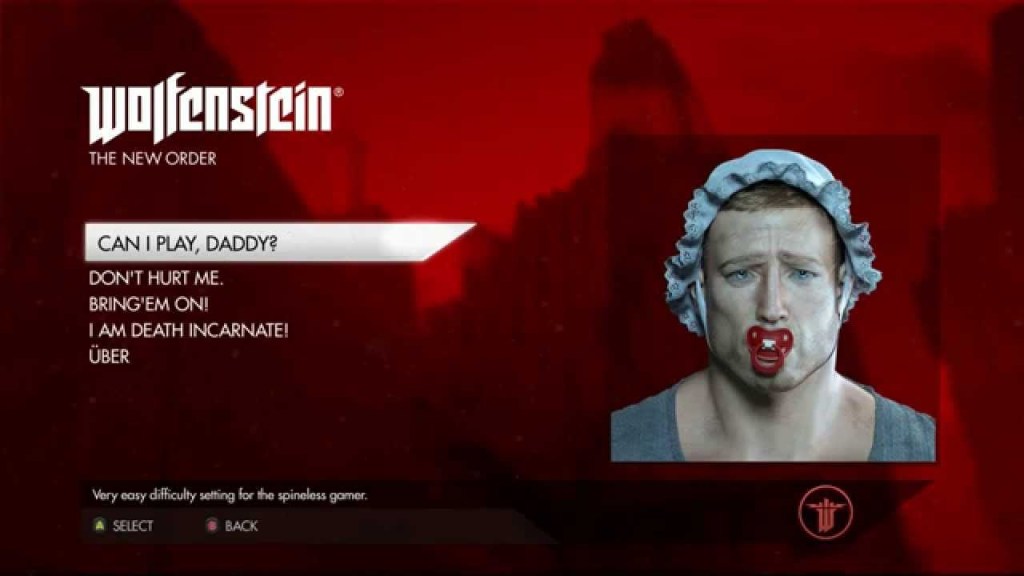
While the assist mode is not nearly the intended way the developers want the player to engage with the game, but it can be used so that more people can experience the story. The assist mode opens a dialogue with the player whenever it is accessed as seen in the above collage, rather than degrading the player like other video games have done for changing the internal difficulty setting, such as in Wolfenstein: The New Order. As can be seen in the image above, the difficulty select at the beginning of Wolfenstein is degrading the player through use of words like “spineless” to describe them for hovering over the easiest difficulty: “Can I play, daddy?”
While Celeste’s difficulty level is high, the game keeps sections short and realistic to complete in one process, while still becoming more difficult and never boring over time by including new gameplay mechanics with each chapter (i.e. the golden feather mechanic being added in Chapter 6). The game tries to minimize the distress that the player feels while also not giving too much eustress, which keeps the player stuck in a state that can be referred to as flow. Flow is an experience that Mihaly Csikszentmihalyi describes as “the state in which people are so involved in an activity that nothing else seems to matter; the experience itself is so enjoyable that people will do it even at great cost, for the sheer sake of doing it.” The game sets itself up so that it works within the confines of flow—potentially inadvertently—by not being too challenging yet not too easy. Additionally, it encourages the player to keep progressing through small messages seen between levels and even in the official merchandise, as seen below.




Celeste works from the very foundation of itself to immerse the player in a feeling of anxiety, without ostracizing them for being uncomfortable with the idea of changing difficulty as not to be overwhelmed. The game and it’s creators wanted to educate about mental illness (specifically anxiety) in a way that could be easily understood but was not abhorrent and unbearable.
Proper Presentation
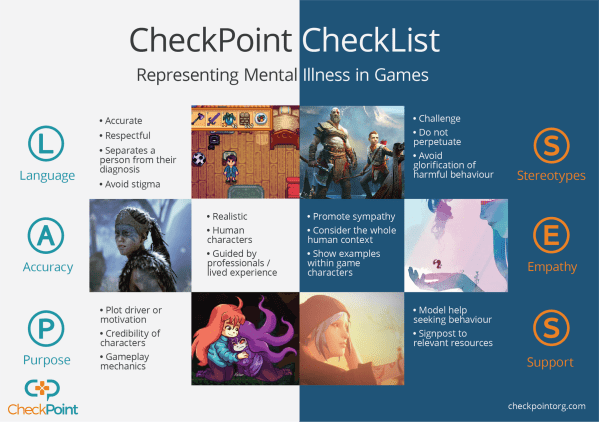
Pictured above: A checklist from CheckPoint’s website overviewing how to properly present mental illness in media.
As I mentioned in Home, presenting mental illness in understandable and relatable ways helps reduce stigma and lets those suffering feel less insecure about reaching out for assistance. The presentation of mental illness reflects how society views the topic, but inversely the way we change this presentation can shift how people view the topic.
Recommendations for how to present mental illness in media are accessible and easy to understand due to the work of organizations such as CheckPoint and Mindframe. These organizations both promote the presentation of believable, accurate, and compelling characters with mental illness for destigmatization. Mindframe has a navigable list of guidelines which can help with determining the best way to present mental illness within a piece of media.
Before anything, they recommend considering the importance of mental illness within the context of a character or story and how much of it should be discussed to effective means. If the mental illness is irrelevant, then it should not be discussed heavily as it may misdirect the intended message or make the character two-dimensional. From there, it is important to consider how and why mental illness fits into different situations of the story and how it is presented. Mental illness should usually not be the defining factor or headline of a piece of work, as it may perpetuate misconceptions about the effect of mental illness in a person. The language used should also be effective in clearly stating cause and effect along with symptoms and diagnosis (i.e. the use of the word “psycho” and how it can imply psychopathy or psychosis, despite being different, as mentioned in Common Tropes).
The image at the top of the page from CheckPoint presents a quick overview of how to present mental illness in media, including some points not discussed. Utilizing any or all of these points can help make the presentation of mental illness within media become more impactful and rewarding to those experiencing it by helping them understand the feelings of the characters clearly and reducing stigma by adequately perpetuating positive and accurate information about mental illness. It is important to build an image of mental illness which shows that one should not be scared of those suffering from it or ushering away sufferers from seeking the help they need.
 Mental Health in Video Games